
English| USD
Suggested for you
More currencies
Choose a language
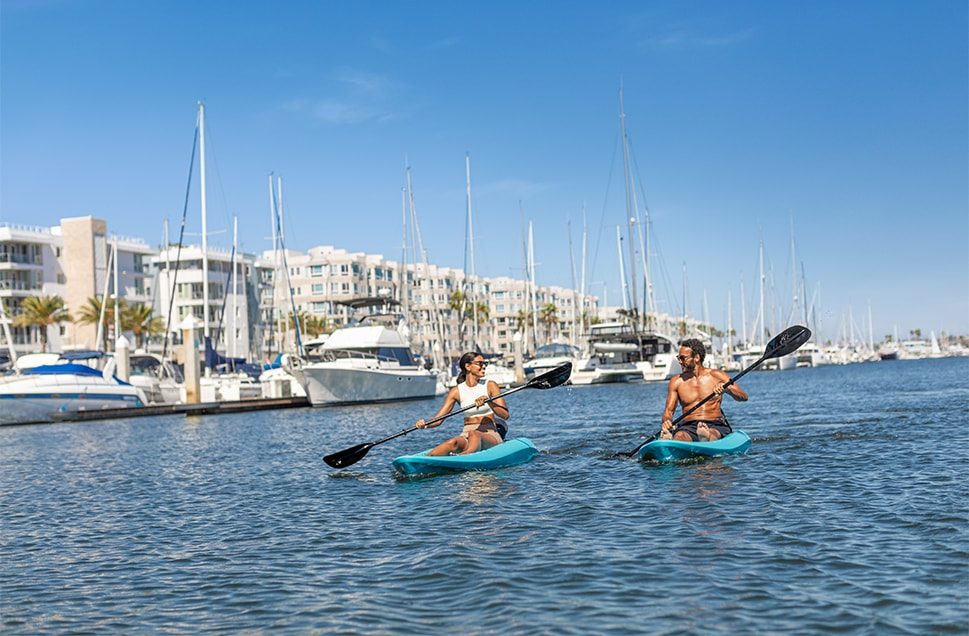
Marina del Rey sits behind a breakwater system that shields the harbor from Pacific swells, creating some of the calmest paddling water in Los Angeles County. Understanding daily wind cycles, seasonal temperature shifts, and tidal influence helps you time launches for flat water and comfortable conditions.
Quick answer
Marina del Rey ocean conditions feature protected harbor water with minimal wave action year-round, temperatures ranging from 55°F in winter to 68°F in summer, and the calmest surface conditions during early morning hours before 10:00 AM when offshore breezes are lightest. The breakwater filters Pacific swells to under one foot inside the marina, though afternoon westerly winds of 10-15 knots can generate chop in open channels after midday.
The marina's 880-acre basin connects to the Pacific through a single jetty-protected entrance channel, where engineered breakwaters absorb the energy of offshore swells before they reach interior mooring areas. That geography creates a dual-conditions environment: the outer harbor near the entrance sees residual wave action from ocean swell, while inner basins and side channels remain flat even when three-foot breakers roll outside the jetty. Water temperature follows a narrow band compared to open-coast locations. Winter lows settle near 55°F from December through March, climbing to 62-64°F by May and peaking at 66-68°F during August and September. The thermocline shifts throughout the day—surface water warms faster than deeper layers, so shallow paddle routes along the eastern channels feel several degrees warmer by afternoon than dawn launches near Ballona Creek. No wetsuit is required in summer, but spring and fall paddlers typically wear 2-3mm neoprene for comfort during longer sessions. Wind patterns dictate surface conditions more than tide or swell. Marina del rey ocean conditions are glassiest between sunrise and 10:00 AM, when light offshore flow or dead calm prevails. By late morning, the marine layer burns off and westerly sea breezes build from 8-12 knots, increasing to 12-18 knots on hot inland days. That afternoon wind generates short-period chop in the main channel and Burton Chace Park area—ripples under a foot but enough to slow novice paddlers and make photography difficult. Fog occurs most frequently in May and June, reducing visibility to under 200 yards before 9:00 AM but clearing by midday. Tidal exchange is moderate, with a 4-6 foot range during spring tides and current speeds reaching 1-2 knots in the entrance channel during peak ebb. Interior basins see minimal flow except near Ballona Creek, where outgoing tide accelerates through the constricted mouth. Kayakers launching from public docks in the inner harbor rarely notice tidal influence, but those paddling the outer harbor or transiting the entrance channel time their routes to avoid fighting the ebb. The protected environment and predictable wind cycle make the marina one of the most forgiving ocean-adjacent paddle zones in Southern California.
“The breakwater absorbs Pacific swells before they reach interior mooring areas, creating flat water even when three-foot breakers roll outside the jetty.”
The best arrival window is 06:00–10:00, which offers the most consistent conditions for calm water and minimal wind. This early window is ideal for kayakers looking to avoid afternoon sea breezes and harbor traffic.
—
The water is flattest before boat traffic increases. High stability for casual paddling.
65°F–70°F water
May gray clouds often keep winds calm. Morning fog usually clears by midday.
70°F–75°F water
Warmest water temperatures of the year. Swells remain generally manageable within the breakwater.
68°F–72°F water
Water clarity improves significantly during these months. Consistent light winds provide stable kayaking conditions.
Verdict: For optimal conditions, plan to arrive during the 06:00–10:00 window on a weekday in October.
Public access to the oceanfront and marina areas in Marina del Rey is available daily. These hours reflect standard operational access for the public waterfront.
Marina del Rey is located along the Los Angeles coastline, accessible via major regional highways and public transit. The most direct approach for water access is via the I-90 West, which terminates near the marina's main basins.
I-90 West (Marina Freeway) to Mindanao Way
Metro Local Line 108 to Admiralty Way/Bali Way
Ride-share or taxi to 13476 Bali Way
For the best conditions for calm water, minimal wind, and lighter crowds, plan your arrival between 06:00–10:00. Public parking is available at several beach lots near the entrance to the marina.
Prepare properly to handle variable ocean conditions and ensure a safe, comfortable experience on the water.
Everything you need to know about marina del rey ocean conditions
The water inside the harbor is generally protected, providing flat conditions that are ideal for kayaking. You will find that marina del rey ocean conditions remain significantly calmer than the open Pacific, making it suitable for paddlers of various skill levels.
While the harbor offers shelter, it is important to observe tide changes and local marine traffic which can create wakes. Monitoring the daily sea surface state ensures a safer experience for those navigating the marina del rey ocean conditions.
You should aim to arrive between 06:00 and 10:00 to enjoy the most tranquil water and minimal wind. This early window is widely considered the best time to experience favorable marina del rey ocean conditions before afternoon breezes pick up.
Coastal fog and changing tidal currents are common environmental factors that can influence visibility and water movement. Staying aware of these marine weather updates helps you prepare for varying marina del rey ocean conditions throughout the day.
Yes, you can monitor local reports or consult the official county resources for real-time information. Staying informed about the current wave height and wind speed helps you understand what to expect from the marina del rey ocean conditions.
The breakwater structures significantly reduce swell, meaning the internal channels remain shielded from the turbulent waves of the open sea. This creates a controlled environment for watersports that differs greatly from the outer coastline.